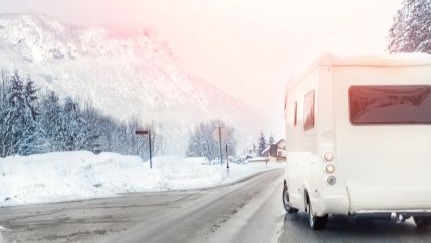
If you want to protect your RV and ensure that it’s ready to go when the weather gets warm enough, it’s helpful to winterize your travel trailer. Don’t know where to start? We’ve got you covered with these step-by-step instructions. Please note that if you’re uncomfortable with any of the steps below, you can seek the help of a professional in winterizing your RV.
1. Drain the tanks and water heater
First, you’ll want to empty all the holding tanks in your RV. When you open the low point drain, which is located underneath your RV, this will drain the freshwater holding tank and the water supply plumbing. Later in the process, you’ll fill these up with antifreeze to keep pipes from freezing or bursting. Make sure to close the drain when you’re finished.[1]
2. Bypass the water heater and inspect the anode rod
You’ll need to bypass the water heater to ensure that antifreeze doesn’t fill it, but instead flows through the plumbing system to protect the pipes. Turn off the valves that lead in and out of the water heater. Open the third valve that links the hot and cold lines. Then, loosen the anode rod, located at the bottom or top of your water heater. If there’s any sign of erosion, you’ll want to replace it.[1]
3. Check the water pump
First, check your manual to find out where your water pump is located. Once you’ve located the pump, check to see whether there’s a winterization kit. If there isn’t one, you’ll need to purchase a winterization kit to install.[1]
4. Use antifreeze on the plumbing system
Make sure that you have an RV-specific antifreeze before you get started. It should be a pink liquid. Use your winterization kit to pump the antifreeze through the plumbing. Make sure you start from one end of the RV and work your way to the other side. Run each fixture until you see the pink antifreeze.[1]
5. Clean the interior of the travel trailer
Before storing your RV for the winter, make sure to clean the entire interior. This not only maintains the freshness inside, but it also helps prevent mold and deter pests from entering.
6. Winterize the appliances
Any appliances that use water supplied by the RV need to be winterized as well. To properly winterize your dishwasher, refrigerator with ice machine, washing machine or more, check the manufacturer instructions on each appliance.[1]
7. Use antifreeze on the P-traps
P-traps are included in many sinks and showers to hold water as a vapor barrier to keep odors out of the RV. Pour a cup of antifreeze down the drain to make sure that the water held in the P-traps doesn’t freeze over the winter months.[1]
8. Replace the caps, valves and panels
Make sure to keep track of any caps that you might have removed in the winterizing process and put them back on. Also, leave the valve that bypasses the water heater in winterization mode and replace the panels that you might have moved in the process of getting to the water pump.[1]
9. Protect the travel trailer from unwanted pests
Other than keeping the interior of the RV clean, there are a few ways to protect your vehicle from unwanted critters. You can set deterrents such as mothballs, essential oils or traps around the interior of the RV. You can also remove food sources and make sure the entry points of the RV are sealed. Finally, you can inspect your RV regularly to look for signs of pests, such as droppings, chew marks or nests.[2]
10. Clean the exterior of the travel trailer
You’ll want to make sure to thoroughly clean the outside of your RV before you store it for the winter. This not only helps improve the appearance of the vehicle, but it also helps prevent damage, preserves the value and longevity of your RV.
11. Check for cracks and holes
Give the interior and exterior of your RV a thorough inspection to make sure there aren’t any holes or cracks that could lead to creatures or moisture getting inside. This includes checking the roof, windows, door seals and underbelly of your RV and repairing any cracks as necessary.
12. Store the propane tank and RV battery in a safe place
Make sure to remove your propane tanks from your RV to prevent any leaks. Choose a safe location to store it and make sure to keep it upright. Disconnect the battery from your RV and store it in a warm location where you can easily charge it.[2]
13. Utilize a travel trailer cover
Finally, make sure to cover your RV once you’re done winterizing it to protect it from the elements. A cover also helps prevent damage and keep pests out during the offseason.
When to winterize the RV?
It’s recommended to winterize your RV before temperatures hit below zero for more than 24 hours. You might want to winterize your RV right after your last camping trip of the season, just to be safe.
Protect your travel trailer with RV insurance
Winterizing your RV is an important step to keep your vehicle in top condition during the colder months. Proper winterization not only safeguards your RV but also preserves its value and functionality for future adventures.
Also make sure to protect your RV while it’s on the road with the proper RV insurance.